


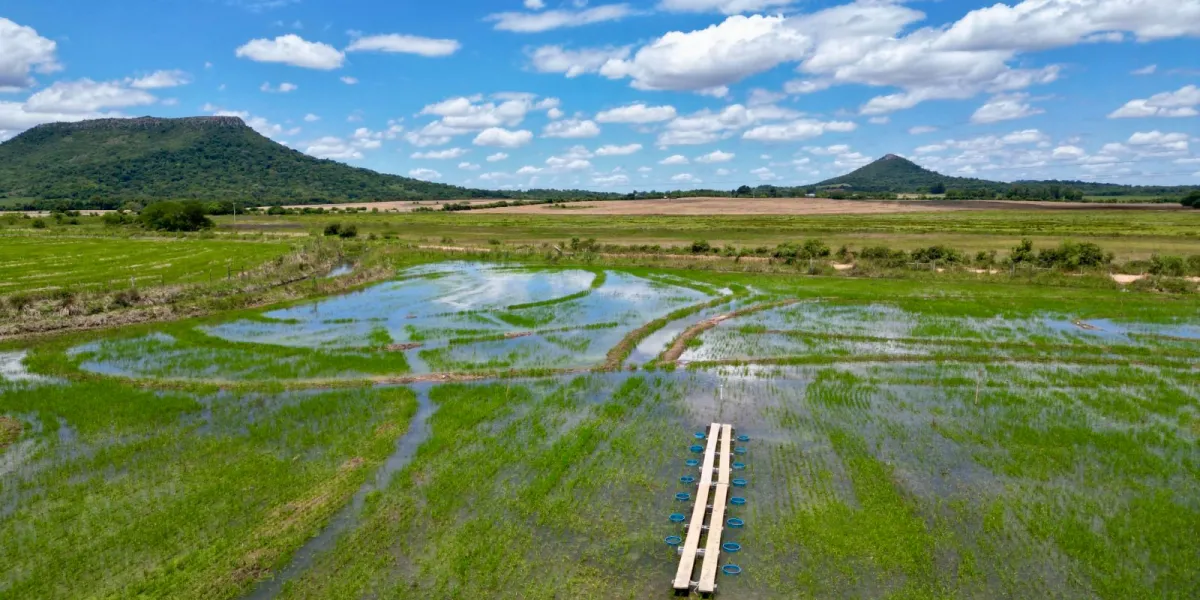

But the big selling point is that there can be an economic benefit to doing it; it’s not just a cost like other forms of carbon removal. Added to agricultural soils, these sorts of rocks can increase nutrients, reduce acidity, and improve water retention, helping to boost crop yields (at least up to a point). Indeed, many farmers already routinely add crushed-up limestone to their soil to counteract the increased acidity caused by fertilizer use and other agricultural practices.
So carrying out enhanced rock weathering could merely be a matter of switching to other types of rock with the potential to lock away more carbon (about twice as much as limestone).
“It’s something the Earth has been doing for billions of years,” says Mary Yap, chief executive and cofounder of Lithos Carbon, an ERW startup. “It can scale. We know it works kinetically.”
“If we can figure out where in the world are the best places to do this and then make that happen,” she adds, “it can help both the communities and also help our atmosphere.”
Enhanced rock weathering could be of particular benefit to farmers who haven’t been able to manage their soil acidity, including many subsistence farmers in poorer parts of the world, says Tim Jesper Suhrhoff, a postdoctoral fellow at the Yale Center for Natural Carbon Capture. One recent study found that ERW boosted the median yields of smallholder farmers in India by more than 20%.
“That is huge for subsistence farmers,” he says.
Agricultural limits
But the new findings, which have not yet been peer-reviewed, suggest there could be a steep trade-off, at a certain point, between benefits for farmers and benefits for the climate.
A number of modeling studies that inform UN climate reports and national climate efforts have estimated that adding crushed rock to agricultural land could store away four to 12 tons of carbon dioxide per hectare per year (though some estimate lower levels). But the authors state in one of the new papers that these findings don’t account for the ways that significant levels of enhanced rock weathering will alter the pH of agricultural soil over time.
Initially it should merely reduce the soil acidity, but adding too much of these materials would eventually push up the pH beyond neutral and into alkaline territory. That could cause micronutrient deficiencies, disease susceptibility, and other problems for certain crops, potentially reducing yields—and, by extension, food supplies and farm revenue. That would likely force farmers to halt the practice, at least until soil pH returns to favorable levels.
#rocks #carbon #removal #eventually #reduce #crop #growth