



This is today’s edition of The Download, our weekday newsletter that provides a daily dose of what’s going on in the world of technology.
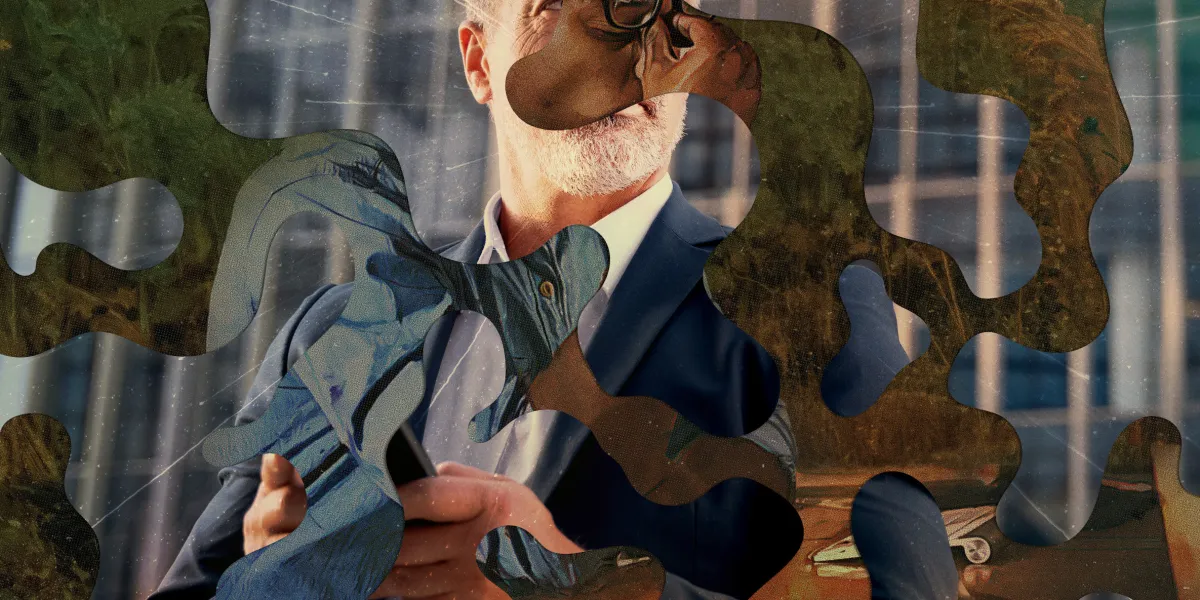
We’ve entered the era of AI malaise
AI is spreading everywhere, and it is not going away. But what will it do? What effect will it have on our society? Will it make life better, or worse? How will we know? What’s the plan?
This technology may very well take our jobs—or just crash the economy instead. Our apps are all getting injections of AI, like it or not. And it is increasingly impossible to tell whether we are relying too much on AI or not using it enough.
We’re all sitting uncomfortably with AI right now. Read our essay on the strange, uncertain mood of the moment.
The era of AI malaise is an essay written by our editor-in-chief Mat Honan. It accompanies MIT Technology Review’s 10 Things That Matter in AI Right Now, our list of the big ideas, trends, and advances in the field that are driving progress today—and will shape what’s possible tomorrow.
Here’s how technology transformed babymaking
Technology is changing the way we make babies. Clinicians have improved hormonal treatments. Embryologists have devised ways to culture embryos in the lab for longer. IVF clinics today offer multiple genetic tests for embryos.
The technology has also had a huge social impact, allowing for changes in the structure of families and providing more reproductive choices for would-be parents. Now, AI and robots are set to usher in another new era for IVF.
Here’s how technology is reshaping babymaking.
—Jessica Hamzelou
This story is from The Checkup, our weekly newsletter giving you the inside track on all things biotech. Sign up to receive it in your inbox every Thursday.
How robots learn: a brief, contemporary history
For decades, researchers have been inspired by science fiction robots that can move through the world, adapt to different environments, and interact with people. But bringing these devices into the messiness of the real world has proved incredibly difficult.
Now, advances in AI are changing that. Instead of relying on rigid rules, robots are learning through trial and error, simulations, and huge amounts of real-world data. The progress represents a revolution in how machines interact with their surroundings.
It also means that Silicon Valley roboticists are dreaming big again. Here’s how we got here.
—James O’Donnell
This story is from the latest issue of our print magazine, which is all about nature. Subscribe now to read it in full.
The must-reads
I’ve combed the internet to find you today’s most fun/important/scary/fascinating stories about technology.
1 ICE plans to develop its own smart glasses
The “ICE Glasses” would identify people in real time. (404 Media)
+ ICE already uses an app with facial recognition to track citizens. (NYT $)
+ A new lawsuit wants to stop ICE using DNA to track critics. (Ars Technica)
2 AI is distorting key economic signals
It makes growth look better and the job market look worse. (WSJ $)
+ Welcome to the economic singularity. (MIT Technology Review)
3 A cyberattack paralyzed thousands of schools
And stole 275 million people’s data from edtech platform Canvas. (NYT $)
+ The digital learning software is used across the US. (CNN)
+ It’s the worst case scenario from an attack on one education platform. (Wired $)
4 The US suspects Nvidia chips were smuggled to Alibaba via Thailand
Super Micro servers containing Nvidia chips were allegedly smuggled. (Bloomberg $)
+ Through a firm linked to Thailand’s national AI initiative. (Reuters $)
5 China’s affordable AI models are increasingly worrying Silicon Valley
They’re often cheaper and more adaptable than US rivals. (Bloomberg $)
+ China is betting big on open source. (MIT Technology Review)
6 Scientists developed a new energy storage system inspired by sunburn
It stores solar energy by mimicking molecular changes in damaged DNA. (BBC)
+ Solar and wind with battery storage are becoming cost-competitive. (Reuters $)
+ Here are three other breakthrough climate technologies. (MIT Technology Review)
7 Russia’s internet crackdown is hobbling small businesses
App restrictions and internet outages are causing headaches. (Reuters $)
8 Younger researchers are more likely to produce “disruptive” science
A new study found more experience led to fewer breakthroughs. (Nature)
9 Why Richard Dawkins was mistaken to believe Claude has feelings
But his line of inquiry wasn’t altogether foolish. (The Atlantic $)
+ Why it’ll be hard to tell if AI ever becomes conscious. (MIT Technology Review)
10 The Golden Globes have new AI rules (and they’re looser than the Oscars’)
AI is permitted as an enhancement, but not as a replacement. (Gizmodo)
+ Last week, the Oscars banned AI actors and writing. (NPR)
Quote of the day
“When I am talking to these astonishing creatures, I totally forget that they are machines. I treat them exactly as I would treat a very intelligent friend.”
—Evolutionary biologist Richard Dawkins reflects on his interactions with advanced AI systems in an essay published in Unherd.
One More Thing

How to stop a state from sinking
In a 10-month span in 2020 and 2021, southwest Louisiana saw five climate-related disasters, including two destructive hurricanes and flash floods. But there could be a better way to protect the area: elevation.
The $6.8 billion Southwest Coastal Louisiana Project is betting that raising buildings while restoring coastal boundary lands that have long acted as natural barriers can preserve this slice of coastline.
Here’s how officials hope to protect vulnerable communities by lifting homes out of the floodplain.
—Xander Peters
We can still have nice things
A place for comfort, fun, and distraction to brighten up your day. (Got any ideas? Drop me a line.)
+ Soaking in a hot tub might offer even more health benefits than a sauna.
+ A court has officially protected America’s largest rainforest from future logging.
+ Experience the majesty of the world’s largest owl collection through these intimate, high-detail portraits.
+ A dad has turned his toddler’s random stories into high-production pop songs that are surprisingly catchy.
#Download #malaise #babymaking #tech