

Subscribe to Updates

    Get the latest creative news from FooBar about art, design and business.

    What's Hot

    Are you getting a $5,000 check from AT&T?

    Your eSIM is your ultimate travel safety net, don’t forget it!

    Deleting your AI chats on Android might be a complete lie, but here's why you shouldn't panic

    Facebook Twitter Instagram
    • Tech
    • Gadgets
    • Spotlight
    • Gaming
    Facebook Twitter Instagram
    circuitthoughtscircuitthoughts
    Subscribe
    • Home
    • Gadgets
    • Insights
    • Apps

      Google Uses AI Searches To Detect If Someone Is In Crisis

      Gboard Magic Wand Button Will Covert Your Text To Emojis

      Android 10 & Older Devices Now Getting Automatic App Permissions Reset

      Spotify Blend Update Increases Group Sizes, Adds Celebrity Blends

      Samsung May Improve Battery Significantly With Galaxy Watch 5

    • Gear
    • Mobiles
      1. Tech
      2. Gadgets
      3. Insights
      4. View All

      Are you getting a $5,000 check from AT&T?

      Your eSIM is your ultimate travel safety net, don’t forget it!

      Deleting your AI chats on Android might be a complete lie, but here's why you shouldn't panic

      Oppo Find X10 Pro Max vs Vivo X500 Pro Max: Sample Photos Comparison

      March Update May Have Weakened The Haptics For Pixel 6 Users

      Project 'Diamond' Is The Galaxy S23, Not A Rollable Smartphone

      The At A Glance Widget Is More Useful After March Update

      Pre-Order The OnePlus 10 Pro For Just $1 In The US

      Motorola Edge+ Review: It Checks A Lot Of Boxes

      This Smartphone Concept Design Is Different… In A Good Way

      Twitter Just Made Searching Your Direct Messages Better

      That Netflix Price Hike Is Starting To Take Place

      Latest Huawei Mobiles P50 and P50 Pro Feature Kirin Chips

      Samsung Galaxy M62 Benchmarked with Galaxy Note10’s Chipset

      9.1

      Review: T-Mobile Winning 5G Race Around the World

      8.9

      Samsung Galaxy S21 Ultra Review: the New King of Android Phones

    • Computing
    circuitthoughtscircuitthoughts
    Home»Tech»An AI “mind-reading” tool can reconstruct what you’re looking at based on a brain scan
    Tech

    An AI “mind-reading” tool can reconstruct what you’re looking at based on a brain scan

    adminBy No Comments3 Mins Read
    Facebook Twitter Pinterest LinkedIn Tumblr Email
    Share
    Facebook Twitter LinkedIn Pinterest Email

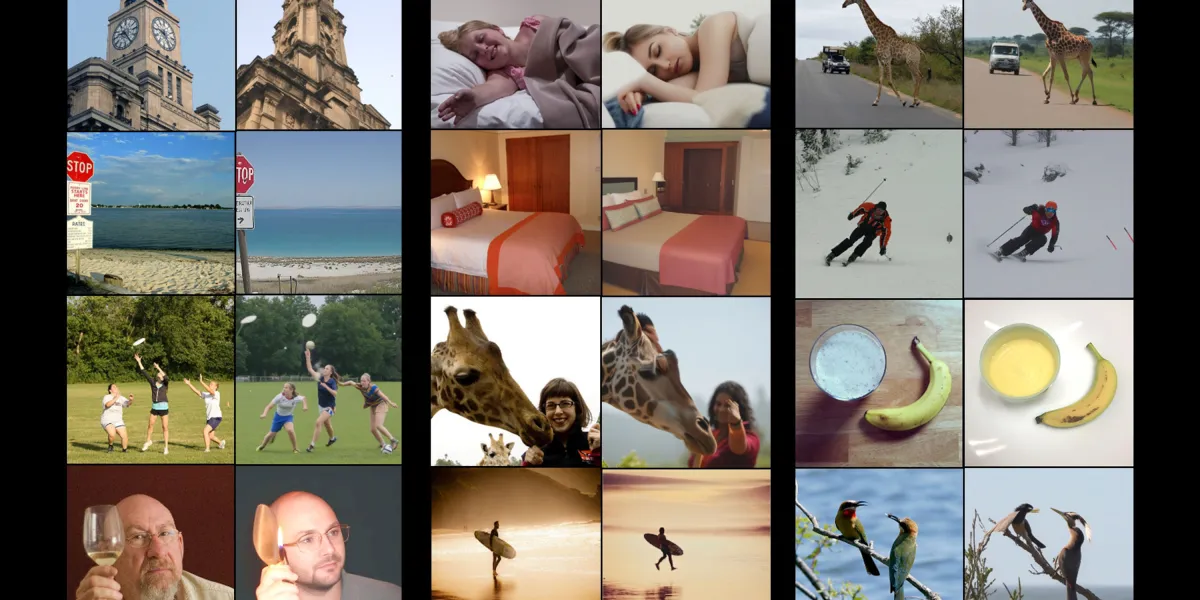
    Other teams have done this, too, and several other tools have been used to recreate images based on brain scan data. But they’re not good enough, says Irani. Say a person saw a banana. These models can generate an image of a banana, but it would look different, she says. “It wouldn’t have the same structure, the same position.”

    A better decoder

    The team  wanted to more closely recreate the images that had been seen. The first step was to train an AI model on already available data from eight people who each had been shown around 9,000 images while in a high-resolution fMRI scanner.

    Crucially, their “brain decoder” has two branches—one to predict the structure of an image (where the colors are, for instance) and a second to predict its content (for example, a bunch of bananas on a plate). The predictions allow a diffusion model, a type of AI best known for creating video and images by gradually cleaning up a noisy mess of pixels, to produce a much more accurate representation of what the person saw.

    But to improve the models they needed more data—far more than was actually available.  

    To get around this problem, she and her colleagues trained another model in the other direction—an encoder that can predict brain activity from an image. The team then used the encoder and decoder together to improve both tools.

    It works like this: start with a new image, say, of a leopard. Then use the encoder to predict what the fMRI brain scan of a person would look like when they saw that picture. The decoder is then used to reconstruct the image again. At first, that image probably won’t look much like a leopard, says Irani. But repeatedly training the models this way eventually leads to dramatic improvements.

    This approach also allows the team to train their models on as many images as they want, even though they might never have been shown to a person in an fMRI scanner. Irani says that around 70% of the training data is from images that were not originally paired with fMRI scans.

    By combining data from multiple studies, they were also able to identify brain regions that seem to share functions across all individuals. One region seemed to respond to images of food, for example, while another responded to images of sports. Irani, a computer scientist, says she is now working with neuroscientists “to see if we can actually use these tools that we’ve developed to really find out new things about the brain.”

    #mindreading #tool #reconstruct #youre #based #brain #scan

    based Brain mindreading reconstruct scan tool youre
    Share. Facebook Twitter Pinterest LinkedIn Tumblr Email

    Related Posts

    Are you getting a $5,000 check from AT&T?

    Your eSIM is your ultimate travel safety net, don’t forget it!

    Deleting your AI chats on Android might be a complete lie, but here's why you shouldn't panic

    Add A Comment

    Leave A Reply Cancel Reply

    Editors Picks
    8.5

    Apple Planning Big Mac Redesign and Half-Sized Old Mac

    Autonomous Driving Startup Attracts Chinese Investor

    Onboard Cameras Allow Disabled Quadcopters to Fly

    Top Reviews
    9.1

    Review: T-Mobile Winning 5G Race Around the World

    By
    8.9

    Samsung Galaxy S21 Ultra Review: the New King of Android Phones

    By
    8.9

    Xiaomi Mi 10: New Variant with Snapdragon 870 Review

    By
    circuitthoughts
    Facebook Twitter Instagram Pinterest Vimeo YouTube
    • Home
    • Tech
    • Gadgets
    • Mobiles
    • Our Authors
    © 2026 ThemeSphere. Designed by WPfastworld.

    Type above and press Enter to search. Press Esc to cancel.